

Modern grandparenthood, reimagined
From loving them
to being legendary to them.
Most grandparenting advice stops at sentiment. The Gran Life equips you with the roadmap your parents never had, so you go from a grandparent by title to a grandparent by design.
Your guide
Alison Richardson, MS
MS in Human Development. 20+ years as a trial consultant, with extensive civil law experience and family law expertise. A healthcare company she built and owned that served thousands of families. 30+ years in business and advisory work combined, and now, a first-time grandmother building this in real time.
This is not the first thing she has written for someone she loves. In 1993 she wrote a book on social skills for her own daughters. It was later rewritten and adopted as curriculum by more than twenty Texas independent school districts. The home management guide she published the same year is held in the collections of the Library of Congress.

Why The Gran Life
Loving your grandchildren comes naturally. Knowing exactly how to show up for them at every age does not. The Gran Life pairs developmental insight with lived experience, so you can become the grandparent your grandchild remembers for the rest of their life.
Five minutes
What kind of grandparent are you becoming?
Fifteen questions that name your grandparent style and your growth edge. It works whether you feel uncertain about all of this or you are already confident and want to go deeper.
Your style, named
Not a personality label. A description of how you already show up, and what that does for a grandchild.
Your growth edge
The one place a small change makes the biggest difference in your family right now.
Guidance that fits
What to read, try, and say next, matched to your result rather than to grandparents in general.
The Gran Life Community
Grandparents figuring this out together
A private Facebook group for grandparents who want more than sentiment. Open now, free to join. Questions get real answers, and nobody has to pretend it is all easy.
The Gran Life Community
Because the group is private, Facebook will ask you to request to join. Leave your email here and the link comes straight to your inbox, so you have it even if you want to join later.
Prefer to go straight there? Open the group on Facebook
Meet Them Where They Are
Know the stage. Nail the gift.
Seven stages, birth through 25. What is developmentally true at every age, in plain language, with what your grandchild needs from you — and the toys and gifts that match the work they are actually doing.
The Discovery Year · Infants, 0–12 monthsWhat can my newborn grandbaby actually see and do?
A newborn sees clearly only about eight to twelve inches away, which is exactly the distance to the face of whoever is holding them. You are already in focus. By the end of the first year most babies are sitting, babbling consonants, responding to their own name, and treating you as a permanent retrieval service for dropped objects. No other year of life packs in this much change.
- Body. Head control, then rolling, then sitting, then pulling up. Tummy time from the first weeks is the training for all of it.
- Thinking. Around eight months they work out that you still exist when they cannot see you. That is also when the crying at handoff starts, and it is a milestone rather than a rejection.
- Feelings. Comfort is the whole curriculum. You cannot spoil a baby by responding to them.
- Language. They knew your voice before they had a face to put with it. Talk, hum, narrate. The words do not matter yet.
What they need from you: your face, close and unhurried. And ask the parents how feeding is going, then ask how they are doing.
What to give: toys that reward kicking, mouthing, and face-to-face play. See award-winning toys for infants →
The “Me Do It!” Years · Toddlers, 1–2 yearsWhy does my toddler grandchild say no to everything?
Because a separate self has just arrived and is drawing its first borders. The word no is not defiance. It is the earliest evidence that this person is someone distinct from you, and it shows up right on schedule. This is the walking, talking, helping, “me do it” stretch.
- Body. Walking well by around eighteen months, then running, climbing, and kicking. Stairs are a project.
- Thinking. Sorting by shape and color, and the first real pretend play. A block becomes a phone.
- Feelings. Enormous emotions with no brakes installed yet. The brakes take years, not months.
- Language. Ten or so words at eighteen months, two-word phrases by two, and a vocabulary that starts growing faster than anyone can track.
What they need from you: respect the border, redirect the behavior. Those are two different jobs, and doing only one of them is what makes this age exhausting.
What to give: stacking, sorting, climbing, and the first pretend play. See award-winning toys for toddlers →
The “But Why?” Years · Preschool, 3–4 yearsWhat is my preschool grandchild working on?
Three is when the toddler era closes and the era of why, wonder, and pretend opens. They start playing with other children rather than alongside them, and they begin telling stories about themselves, which is the beginning of a life they will actually remember.
- Body. Pedaling a trike at three, hopping on one foot at four, and scissors, crayons, and buttons all getting easier.
- Thinking. Questions that stump adults. Four is widely considered peak magic for a reason.
- Feelings. Real friendships, real exclusion, and the first fairness arguments.
- Language. By three, sentences a stranger can mostly follow. By four, a story with a beginning and an end.
What they need from you: someone who takes the story seriously. This is the age where lasting memory switches on, so what you do now, they keep.
What to give: dress-up, building, early math, and playing the story with you. See award-winning toys for preschool →
The “That’s Not Fair!” Years · Early Elementary, 5–7 yearsHow do I stay close to a grandchild who is suddenly busy?
By being the adult who is interested in what they are interested in, rather than the adult who asks how school was. Five to seven is when competence becomes the currency: rules, turns, jokes, and wanting to be good at things.
- Body. Coordination and stamina arrive. So do bikes, sports, instruments, and the first real skills.
- Thinking. Logic, rules, and a fierce sense of what is fair. Games with turns finally work.
- Feelings. Best friends, and the first time being left out really lands.
- Language. Reading takes off, then reading to learn. Jokes get genuinely funny.
What they need from you: a standing thing that is just yours. Not an event. A habit.
What to give: games and builds for skill, strategy, and reading. See award-winning toys for early elementary →
The “Did You Know?” Years · Pre-Teens, 8–11 yearsWhy does my pre-teen grandchild suddenly want privacy?
Eight- to eleven-year-olds can concentrate for an hour, follow five directions in a row, and argue a point. They are reading to learn, building real skills, and starting to want privacy. And for many of them, the body is beginning to change earlier than it did when you were their age. Wanting a closed door is not a verdict on you.
- Body. Real stamina and real coordination, and for a good share of them, the first signs of puberty well before thirteen.
- Thinking. Long projects, multi-step instructions, and the beginnings of genuine expertise in whatever they have chosen.
- Feelings. Friendship gets complicated, comparison starts, and a private self begins forming.
- Language. They can hold an argument, and they will notice if you talk down to them.
What they need from you: to be taken seriously and not teased. This is the age where an adult who treats them like a person becomes the adult they come back to at sixteen.
What to give: kits, puzzles, and strategy games with a real skill to climb. See award-winning toys for pre-teens →
The Late-Night Text Years · Teens, 12–17 yearsMy teenage grandchild has gone quiet. Is that normal?
Yes, and it is not about you. Adolescence is the work of separating from the adults who raised you, and a grandparent has an advantage here that a parent does not: you are not the one setting the curfew. Identity, big ideas, friends first.
- Body. Puberty, growth, and a sleep clock that genuinely shifts later. They are not lazy.
- Thinking. Abstract reasoning arrives. Judgment about risk takes years longer.
- Feelings. By fifteen they are thinking hard about who they are versus who people want them to be.
- Language. Fewer words to you, enormous numbers of words to their friends. The channel changed, not the volume.
What they need from you: a safe harbor with no agenda. Be the person who is glad to see them and is not keeping score.
What to give: games to play for keeps, and gifts that are unmistakably theirs. See gift ideas for teens →
The Launch Years · Young Adults, 18–25 yearsWhat is my role once my grandchild is an adult?
The milestones end. The relationship does not. New cities, new jobs, a lot of travel, and still figuring it out. This is the stretch where a grandparent stops being an authority and becomes something rarer: an adult who is on their side and is not evaluating them.
- Body. Fully grown, and the brain's judgment and planning systems are still finishing into the mid twenties.
- Thinking. Real decisions with real consequences, often made without a safety net.
- Feelings. Comparison, and a private fear of being behind. They rarely say this out loud.
- Language. They will tell a grandparent things they will not tell a parent, if the grandparent has not made it costly.
What they need from you: interest without inspection. Ask about the thing, not the plan.
What to give: gifts for the move, the apartment, and the trip home. See gift ideas for young adults →
The Gran Life List
Why these toys and not the bestseller list
Most gift guides sort by price or by popularity. This one sorts by development, because a gift that matches what a child is currently mastering gets played with for months, and one that misses gets played with once.
Award winners, not guesses
Almost every toy on these pages has won a recent award from an organization that tests toys with children and teens. Confirmed awards are named.
The child does the playing
If the toy does the playing, the child watches. The things that last are the ones a child can rebuild into something new next week.
Aimed at the actual work
At two it is cause and effect. At nine it is being good at something. Start from what the child is working on and the field narrows fast.
The Gran Life is a participant in the Amazon Services LLC Associates Program. As an Amazon Associate I earn from qualifying purchases. Some links on these pages are affiliate links, and if you buy through them The Gran Life earns a small commission at no extra cost to you.
Questions grandparents ask
At what age do children start remembering their grandparents?
Most children begin forming lasting autobiographical memories between ages three and four. Before that, what a grandchild keeps is emotional rather than episodic. They will not remember the afternoon, but they carry the feeling of having been delighted in.
Are developmental milestones deadlines?
No. Milestones are ranges, not deadlines. Typical development spans a wide window at every age, and two children hitting the same milestone eight months apart can both be entirely on track. Everything on this site describes what is typical, not what is required.
How involved should a grandparent be without overstepping?
Follow the parents' lead on rules and routines, and take your own initiative on relationship. You do not need permission to be interested, consistent, and reachable.
What do I do when I disagree with how my grandchild is being raised?
Ask before you argue. Most disagreements between grandparents and adult children are about information rather than values, and the parents usually have newer information. If it is genuinely a safety issue, say it once, plainly, in private, and then let it be theirs to decide.
What is the difference between a grandparent by title and a grandparent by design?
You become a grandparent by title in one second, with no preparation and no roadmap. A grandparent by design decides on purpose who they want to be to a grandchild and builds toward it. Both love the child. Only one of them has a plan.
Free, by text
You do not have to remember any of this
Two short texts that arrive on their own, matched to your grandchild's exact age. One tells you what they are working on. The other tells you what to do about it.
The Gran Life Milestone Message
Your grandchild's developmental milestone, plus one way to use it: a question to ask, a game to play, a moment to watch for. Weekly for the first 13 weeks (when you add the birth day), then on the 1st of each month until age eighteen.
See The Gran Life Milestone Message →The Gran Life Date
Three ways to connect, matched to their age from birth through 25: a No Cost Idea, a Gift & Outing Idea, and a Long Distance Idea for the miles between visits. Connection does not happen by accident. It happens by appointment.
See The Gran Life Date →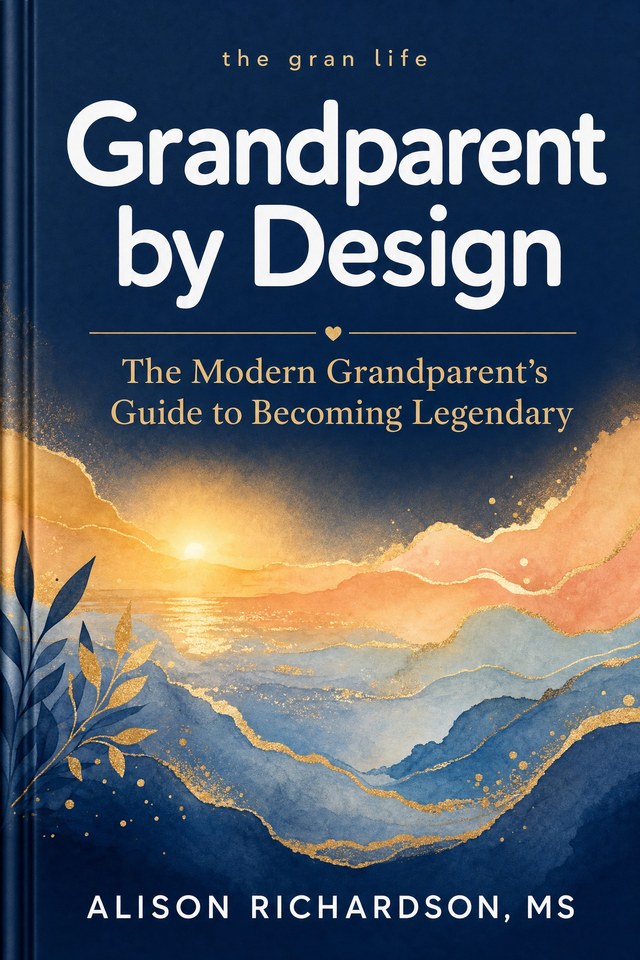
Coming Soon
The book: Grandparent by Design
The Modern Grandparent's Guide to Becoming Legendary. A warm, framework-driven guide that turns real developmental science into things you can actually do.
You become a grandparent by title in one second. Becoming the grandparent your grandchildren can't wait to see, that part is designed.
Launching February 2027 · Founding cohort forming
The Masterclass
A guided path from grandparent by title to grandparent by design: six modules, a real workbook, and a dedicated group of grandparents walking it right alongside you. You finish with your own one-page Design Blueprint, a clear plan for the legacy you want to leave.

The Gran Life Letter
One letter a month, worth opening
What your grandchild is working on at their age, what to say when things get tight with your own kids, and the ordinary moments that turn out to be the ones they keep.
By signing up you agree to receive emails from The Gran Life. Unsubscribe anytime.
The Gran Life mascots
Meet Suki and Zoe
Our two doodles, and the unofficial greeters of The Gran Life. They pop up across the site to help show you around.
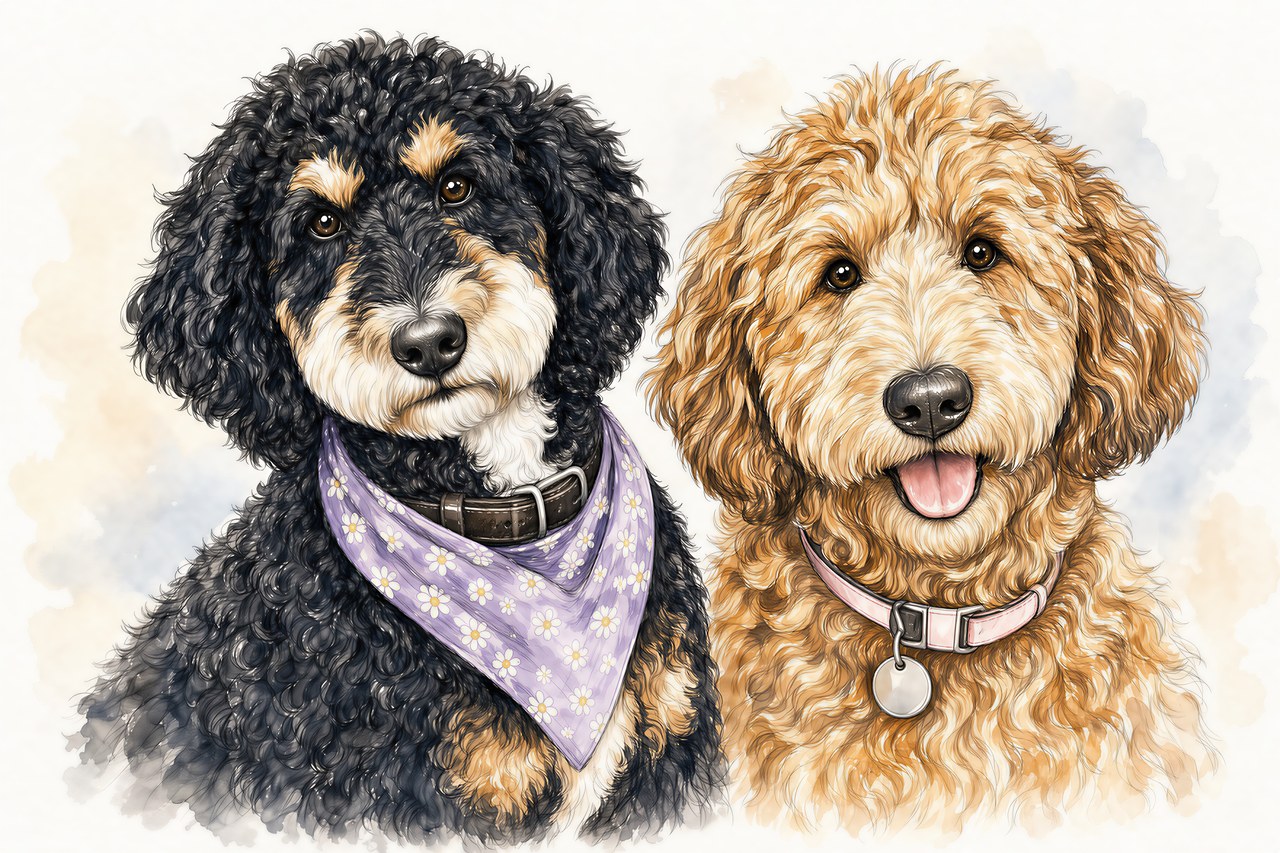
Suki on the left, Zoe on the right.